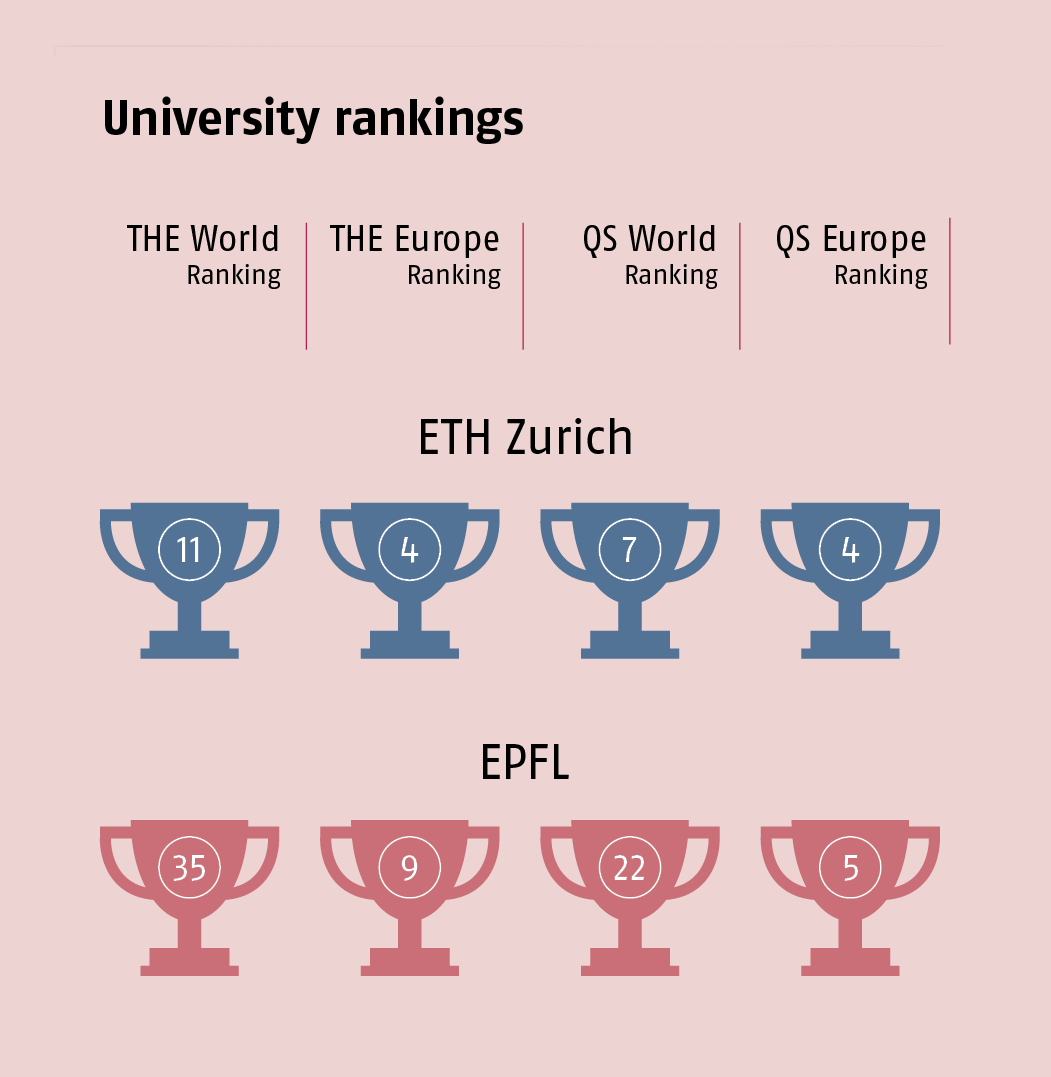
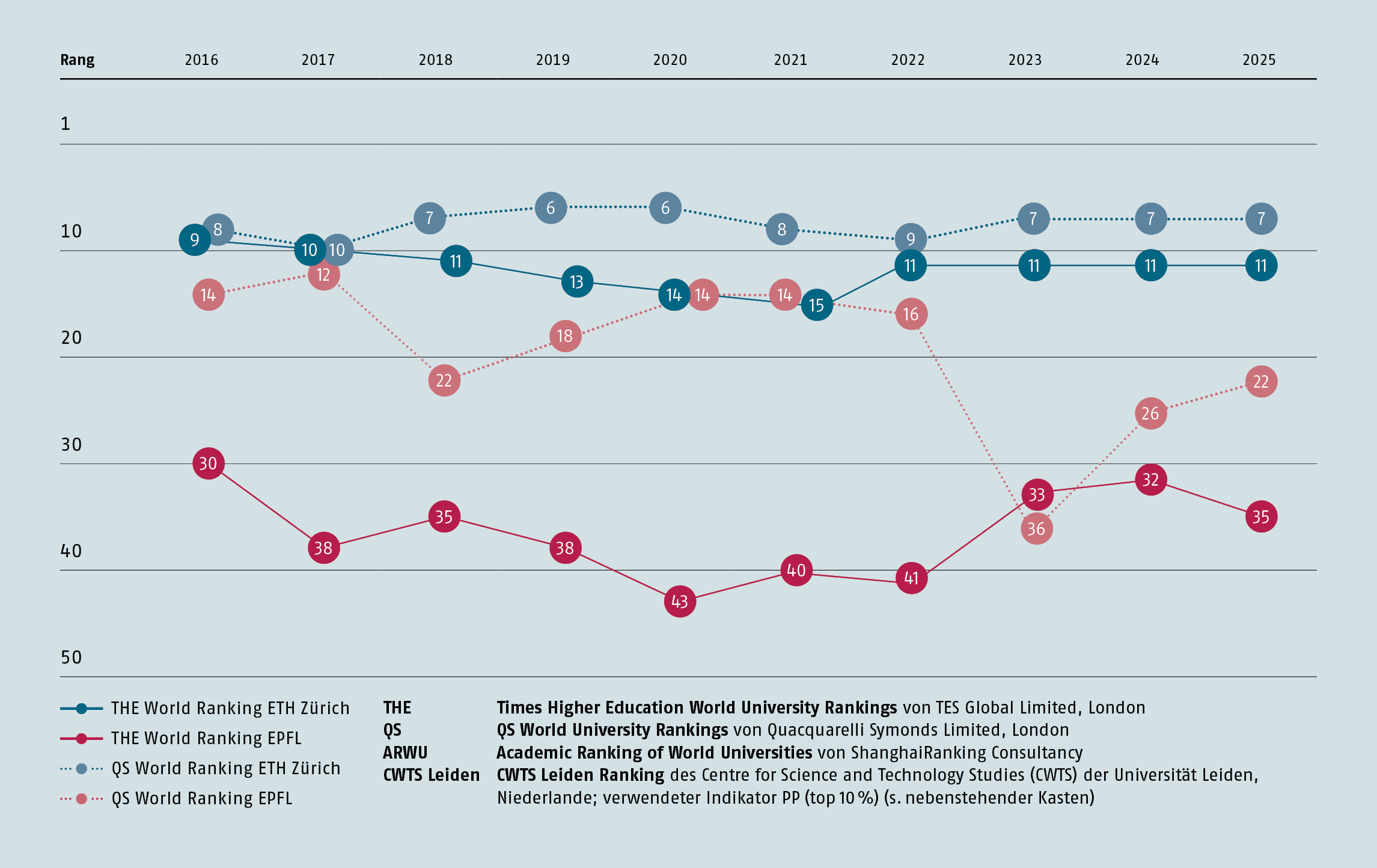
The universities are assessed and ranked by institutions and businesses using various methods. In , the THE (Times Higher Education World University Rankings) and QS (QS World University Rankings) rankings significantly changed their methodology. This must be taken into account when making comparisons with previous years.
THE uses key performance indicators for teaching (29.5% weighting), research environment (29%), research quality (30%), international out look (7.5%) and financing by the industry (4%).
QS focuses mainly on reputation (with a 30% weighting on academic reputation and 15% on employer reputation), followed by citations (20%), internationality (15%) and the student-teacher ratio (10%).
ARWU (Academic Ranking of World Universities of Shanghai Ranking Consultancy) makes use of performance indicators based on the academic performance or research output – in particular Nobel Prizes or Fields Medals – of graduates, sta’ and highly cited researchers from the institutions assessed.The publication activity of an institution is also judged based on the number of articles that have been published in a select group of themost respected journals, and the ratio between the number of publications and the number of researchers employed at an institution.
CWTS Leiden (Centre for Science and Technology Studies Leiden Ranking) is based solely on the publication activity of the universities, using this to calculate the indicators to assess research performance. The CWTS Leiden World and Europe rankings of both Federal Institutes of Technology are based on the proportion of publications that are among the top 10% of most cited publications (PP (top 10%)) in the relevant subject area worldwide. CWTS publishes two versions of the rankings. Both versions are based on the same indicators of scientific performance. The Tradition Edition uses data from the Web of Science database, while the Open Edition of the rankings, introduced in 2024, is characterised by the exclusive use of open data and a completely transparent methodology.
Rankings of ETH Zurich (blue) and EPFL (red) according to the THE, QS, ARWU and CWTS Leiden rankings in 2025/2026
Rankings of ETH Zurich (blue) and EPFL (red) according to the THE and QS World rankings 2016–2025